
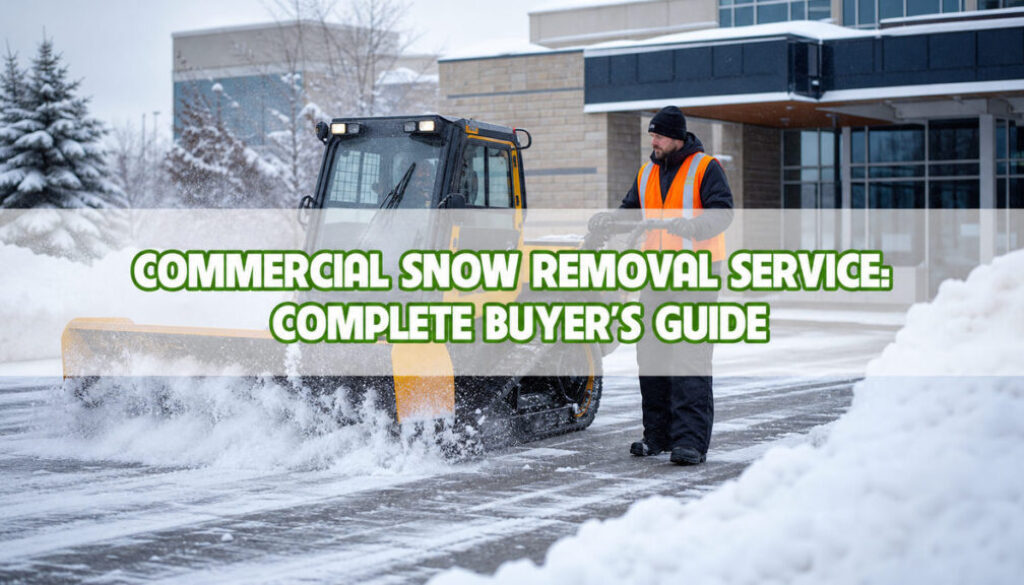
When an overnight storm buries parking lots, entrances, and loading zones, can your property open safely before staff, customers, and deliveries arrive? A reliable commercial snow removal service helps Canadian businesses stay open and accessible through tough winter weather. The biggest value comes from knowing exactly what is covered, how quickly crews respond, which equipment is used, and what records are kept.
Canadian commercial properties can run into slip-and-fall risks, accessibility problems, delays, and unexpected costs when snow and ice are dealt with only after trouble starts. A strong winter program lays out what happens before, during, and after each storm. This guide also reflects PB Cleaning 24/7 service details, including the need to confirm scope, safety needs, access conditions, and any custom seasonal requests before work begins.
1. What Does a Commercial Snow Removal Service Include?
Commercial snow removal is winter maintenance for business properties, shared access areas, and high-traffic sites. It is not the same as residential service. The scale is bigger, the stakes are higher, and the work often needs mapped service areas, planned dispatch, service logs, material records, and clear liability controls.
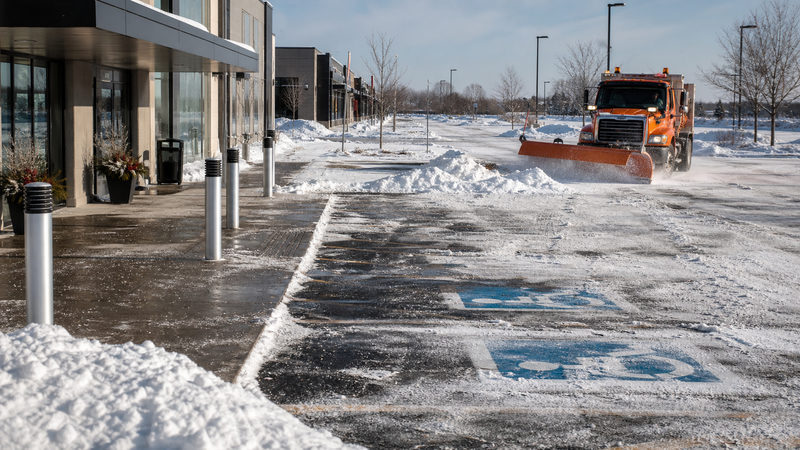
PB Cleaning 24/7 snow removal service covers snow clearing for driveways, walkways, entrances, and basic access areas during winter. For commercial buyers, that scope should be turned into a written service plan. The provider should clearly identify parking lots, drive lanes, entrances, fire routes, accessible spaces, loading zones, and pedestrian walkways.
Clearing, Plowing, Stacking, and Hauling
Snow plowing pushes snow away from drive lanes, lots, and access roads. Snow clearing covers more ground, including walkways, entrances, ramps, stairs, and tight areas. Snow removal usually means taking snow away from a work area instead of just pushing it off to the side.
Snow stacking places snow in approved storage areas on the property. Snow relocation moves piles to a safer or less disruptive spot on the same site. Off-site snow hauling goes further by loading snow into trucks and taking it to an approved disposal location.
A complete commercial scope may include:
- Parking lot plowing and lane clearing
- Entrance, walkway, ramp, and stair clearing
- Loading dock and delivery access clearing
- Fire route and emergency access maintenance
- Accessible parking space and curb-cut clearing
- Snow stacking, relocation, or off-site hauling
Ice Control and Refreeze Prevention
Commercial salting services help keep ice from bonding tightly to pavement. Anti-icing uses material before ice forms, while de-icing treats surfaces after snow or freezing rain has already created hazards. Ice checks matter too. Meltwater can refreeze near shaded areas, drains, slopes, and building entrances.
Good crews look beyond the obvious snow. A thin sheet of ice near a doorway can be more dangerous than deep snow at the far end of a lot. For more workplace winter safety context, the Canadian Centre for Occupational Health and Safety provides guidance on working safely in icy and snowy conditions.
Optional services can include catch-basin clearing, rooftop access clearing, snow pile reduction, and post-storm cleanup. Some properties also need extra service after municipal plows leave windrows across entrances. That is why buyers should confirm every included and excluded task before signing.
2. Properties, Equipment, and Site-Specific Snow Planning
Commercial snow work changes from one property to the next. Offices need staff parking, visitor spaces, entrances, and walkways kept clear. Retail plazas need frequent access because customer traffic changes throughout the day. Warehouses and industrial sites rely on clear loading docks and safe equipment routes.
Condominiums, healthcare facilities, mixed-use buildings, and multi-site portfolios add more moving parts. Healthcare sites may need priority entrances and emergency access cleared first. Condominiums often need repeated walkway service because residents leave and return at different times.
Matching Equipment to the Site
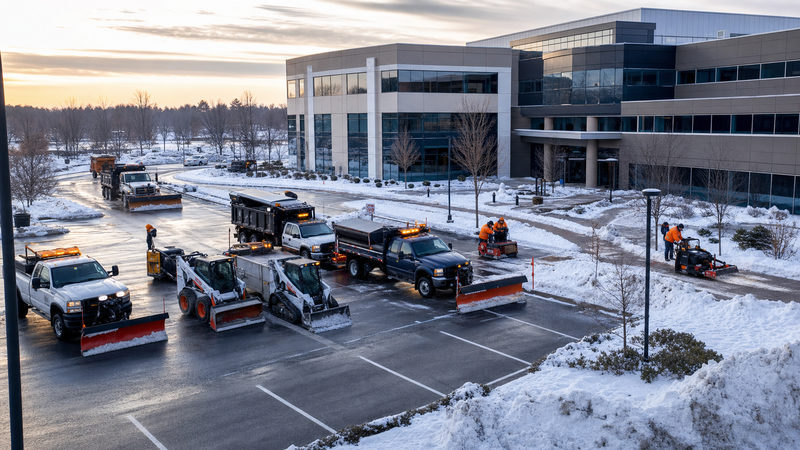
Equipment should match the property, not just whatever is sitting in the contractor’s yard. Pickup plows work well for smaller lots, drive lanes, and flexible route work. Skid steers, wheel loaders, tractors, sidewalk machines, sweepers, spreaders, and hand crews all have their place.
Wheel loaders are useful for large lots and heavy piles. Skid steers work well around loading areas, tight corners, and snow stacking zones. Sidewalk machines and hand crews support commercial snow removal around entrances and walkways where pedestrian safety needs closer attention.
Several site conditions affect equipment selection:
- Traffic volume and delivery schedules
- Pedestrian activity near doors and walkways
- Pavement type, curbs, slopes, and drainage
- Landscaping, bollards, islands, and wheel stops
- Overhead restrictions near canopies or loading docks
- Available space for snow stacking
Building the Snow Management Plan
A site-specific snow management plan turns winter service from guesswork into a real operation. It should identify priority zones, stacking locations, sensitive surfaces, drainage points, and equipment routes. It should also mark hazards such as speed bumps, curbs, raised utilities, and low-clearance areas.
In real winter work, mapped service areas prevent a lot of disputes after storms. They also help crews move faster when visibility is poor. With a clear map, the contractor can handle entrances, fire routes, accessible parking, and loading zones before moving on to less critical areas.
PB Cleaning 24/7 confirms scope and safety requirements before taking on commercial and industrial work. That same approach is especially important for winter service. Unusual access, industrial sites, hazardous areas, or custom seasonal requests should be reviewed before crews arrive in storm conditions.
3. Storm Monitoring, Response Times, and Ice Management
Commercial snow service often needs 24-hour monitoring because storms do not care about business hours. Overnight accumulation can block entrances before the first employee gets there. Dependable providers watch forecasts, radar, pavement conditions, and local reports before sending crews out.
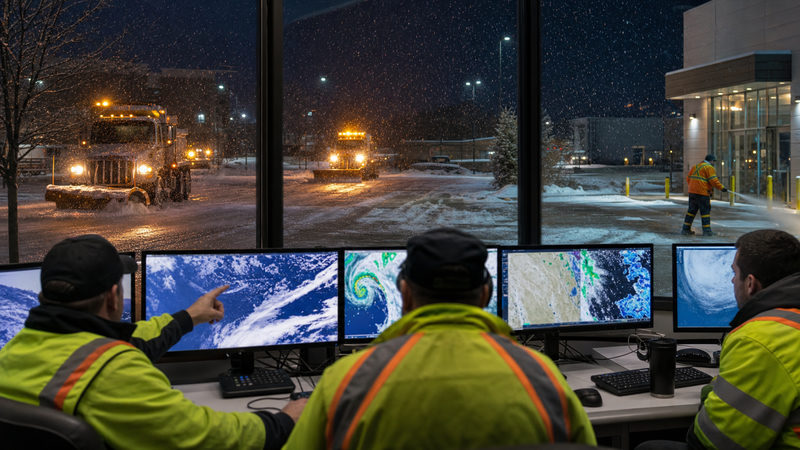
Dispatch procedures should explain who goes where, when service starts, and how updates reach the client. “Immediate service” sounds good, but it is too vague for a contract. A stronger standard uses clear timing, such as service beginning after a trigger depth or within a stated response window.
Common Service Triggers
Service triggers tell crews when to act. Some contracts use accumulation depth, such as a set number of centimetres. Others include freezing rain, drifting, flash freeze risk, pavement temperature, or site-specific operating hours.
Commercial buyers should compare triggers closely. A low trigger may improve access, but it can also mean more visits and higher costs. A higher trigger may save money, yet leave more snow on the property during operating hours.
Common triggers include:
- Snow accumulation reaching an agreed depth
- Freezing rain or ice formation
- Drifting that blocks access routes
- Temperature drops after thawing
- Client-specific opening, delivery, or shift times
Route Sequencing and Return Visits
Priority planning matters during long storms. Crews may clear fire routes, entrances, accessible spaces, and main drive lanes first. Then they come back for a full cleanup after traffic slows down or the storm ends.
Prolonged snowfall may need several passes. Heavy snow can be too much for one end-of-storm visit, especially on larger properties. Freezing rain may require inspections and treatment even when hardly any snow falls.
Overnight storms bring a different challenge. Crews need enough route density, operators, and backup equipment to cover sites before morning traffic begins. Buyers should ask how many properties are on the same route and how the provider handles widespread storms.
Salt, De-Icers, and Material Controls
Contracts should clearly state whether salting and de-icing are included, automatic, billed separately, or capped by a material allowance. This affects safety and budget. It also affects how fast crews can respond during ice events.
Calibrated application rates help crews use enough material without wasting salt. Pavement-temperature monitoring helps too, because air temperature alone can be misleading. Pre-treatment may reduce bonding before a storm, especially around priority entrances and walkways.
Property-sensitive products can reduce damage to concrete, landscaping, and interior flooring. Still, no product removes every risk. Providers should document the material type, application time, observed conditions, and areas treated.
4. Commercial Snow Removal Cost and Pricing in Canada
Commercial snow removal cost in Canada varies because winter conditions change a lot by region. Snowfall patterns, freezing rain frequency, labour availability, and fuel costs all affect pricing. Property size and service expectations usually influence cost more than the address alone.
One pricing point is worth keeping in mind. PB Cleaning 24/7 uses quote-based pricing for snow removal and other custom jobs. Buyers should expect a provider to review scope, access, site conditions, and service needs before giving a firm commercial price.
Common Pricing Models
Seasonal snow removal contracts give businesses predictable budgeting. The client pays an agreed seasonal amount for a defined scope. The contract should still explain extreme weather terms, salt allowances, and hauling exclusions.
Per-visit pricing charges each time crews attend the property. This model can work for lower-risk sites or properties used only at certain times. With frequent storms, though, per-visit billing can become harder to predict.
Per-centimetre or tiered accumulation pricing changes with storm depth. Hourly billing charges for labour and equipment time. Hybrid agreements combine a base seasonal price with extras for hauling, severe events, or material overages.
- Seasonal: predictable budget for defined winter service
- Per visit: useful when service needs vary
- Tiered accumulation: pricing changes as storm depth increases
- Hourly: common for hauling, loaders, or unusual work
- Hybrid: combines fixed service with billable extras
Cost Drivers Buyers Should Compare
Lot area is only one cost factor. Sidewalk length, number of entrances, ice frequency, service triggers, and operating hours also matter. Return visits can raise costs during long storms or freeze-thaw cycles.
Salt use affects both pricing and day-to-day operations. Deep cold, freezing rain, and repeated refreezing can increase material use. Sites with slopes, shaded pavement, or poor drainage often need more ice monitoring.
Snow hauling services are often priced by loading time, truck capacity, disposal distance, and tipping charges. Hauling may be needed when piles reduce parking, block sightlines, or overwhelm drainage areas. Contracts should explain when hauling begins and how fees apply.
Do not compare only the lowest headline price. Compare equal scopes, mapped service areas, response standards, material allowances, documentation, and exclusions. A cheaper proposal may cost more if it leaves entrances untreated or bills every return visit separately.
5. What a Commercial Snow Removal Contract Should Cover
A strong contract clears up confusion before the first storm. It should define exact areas, tasks, service triggers, operating hours, priority zones, and completion standards. Whenever possible, it should include maps or marked site plans.
The agreement should explain how the provider handles regular storms, overnight accumulation, freezing rain, severe events, and emergency snow removal. Severe weather terms need to be plain. Without them, both sides can end up disagreeing when crews are dealing with city-wide demand.
Scope, Extras, and Exclusions
Contracts should clarify whether salt, de-icers, snow stacking, relocation, hauling, return visits, and inspections are included. They should also identify billable extras. Material limits, disposal fees, and after-hours requirements should be clearly spelled out.
PB Cleaning 24/7 confirms scope before high-risk jobs, industrial sites, unusual access, hazardous materials, or custom work. For winter service, that means the provider should confirm property hazards and access limitations before dispatch. Industrial yards and construction-adjacent sites may need extra safety review.
Commercial contracts should address:
- Service areas and excluded areas
- Trigger depths and ice treatment triggers
- Operating hours and priority times
- Salt, de-icer, and material billing
- Snow stacking, relocation, and hauling terms
- Emergency service and severe storm terms
Insurance, Safety, and Communication
Buyers should confirm liability insurance, workers’ compensation coverage under the applicable provincial system, and operator qualifications. Subcontractor controls matter as well, since many providers add crews during peak storms. The contract should state who may work on site and what standards they must follow.
Communication should be simple and documented. The agreement should name dispatch contacts, escalation contacts, damage-reporting procedures, cancellation terms, renewal conditions, and extra charges. Clients should also know how to request emergency snow removal during an active storm.
Records and Documentation
Reliable records support quality control and incident response. Timestamped service logs show when crews attended the property. Weather records, material application records, site observations, and before-and-after documentation add helpful context.
These records help with contract administration and defensible winter maintenance practices. Documentation does not remove risk. It does show that the property owner and contractor followed a planned, trackable process.
The best records are specific. They note the areas serviced, the conditions observed, the material applied, and any hazards reported. Managers can then review recurring issues such as drifting, blocked drains, or refreeze near entrances.
6. How to Compare Commercial Snow Removal Providers
Start with commercial experience, not just proximity. A local commercial snow removal company may know the area well, but capacity matters more than distance alone. Buyers should check route density, staffing depth, backup equipment, and experience with similar properties.
Ask for references from offices, plazas, warehouses, condominiums, or facilities like yours. Also ask how the provider communicates dispatches, delays, completed visits, hazardous conditions, and emergency requests. Clear communication often separates organized operators from reactive ones.
Before comparing quotes, request a site assessment. Use the same property maps, service areas, triggers, response standards, and documentation requirements for each proposal. Confirm liability insurance, workers’ compensation standing, safety training, equipment maintenance, and subcontractor oversight.
Professional winter property maintenance supports safer access, fewer disruptions, and reduced slip-and-fall exposure. No provider can remove every winter hazard. The real question is whether the provider can show a practical plan for monitoring, response, ice management, and documentation.
Many buyers search for commercial snow removal near me during the first major storm. By then, reliable providers may have little route capacity left. Book before winter routes fill so the contractor can map the site, confirm stacking areas, and prepare the operational plan.
Conclusion
A dependable commercial snow removal program brings together property-specific planning, measurable response standards, suitable equipment, proactive ice management, transparent pricing, proper insurance, and detailed service records. It also defines entrances, walkways, parking areas, loading zones, fire routes, and snow-hauling requirements before winter pressure starts. That helps businesses compare providers by operational capacity and contract clarity, not price alone.
For Dawson Creek and surrounding area properties, PB Cleaning 24/7 provides professional, reliable, flexible cleaning and seasonal support services. PB Cleaning 24/7 snow removal service covers driveways, walkways, entrances, and basic access areas during winter, with quote-based scope confirmation for custom needs. Request a site assessment and itemized quote before winter routes fill.
PBCleaning 247
Address: 1021–102 Ave, Dawson Creek, BC, V1G 2B9 (Next to The Butcher Block)
Hotline: +1 250-784-6846
Email: pbcleaning247@gmail.com
Fanpage: https://www.facebook.com/PBCleaning247


