

A clean home can feel calm for a few hours. Then life happens. Dust, crumbs, pet hair, grease, laundry piles, and bathroom mess all creep back in. For busy households, the benefits of routine house cleaning show up in small, useful ways every day. You spend less time catching up, and your home feels easier to live in.
Still, it is not always obvious what needs regular attention and what can wait. Tenants, landlords, property managers, and short-term rental hosts often ask the same thing. From real day-to-day cleaning work, routine cleaning usually works best when it focuses on the rooms people use most. That means kitchens, bathrooms, floors, entryways, and shared living spaces.
This guide walks through what basic cleaning includes, when deep cleaning is the better choice, and how PB Cleaning 24/7 prices standard cleaning. It also covers booking details, simple preparation tips, and ways to get more value from each visit.
The Main Benefits of Routine House Cleaning
It keeps everyday mess from becoming a bigger job
Routine house cleaning keeps normal mess from getting ahead of you. Dust settles on furniture, base areas, shelves, and electronics. Crumbs move from kitchens into living rooms and hallways. Bathroom moisture can also make soap residue and grime show up faster than you might expect.

Real service calls tend to show the same pattern. Smaller recurring cleanings can help reduce the need for heavy deep cleans. The home stays closer to a manageable baseline. You are not starting from scratch every time guests are coming over or inspection day is near.
Think about kitchen counters. Wiping them once a week takes far less effort than scrubbing sticky build-up later. Regular floor care also stops tracked-in dirt from spreading through the whole home. Quick bathroom cleaning helps with odours, splashes, and visible residue too. These small resets protect your time and energy.
It makes the home feel calmer and easier to use
A home does not have to look perfect to feel peaceful. But visible clutter and dirty surfaces can make everyday routines feel heavier than they need to. Clean counters, fresh floors, and tidy bathrooms give you a better starting point. Best of all, you can relax without seeing unfinished chores everywhere you look.
Routine cleaning also helps families get through the week with less friction. Kids can find their things more easily. Pet owners can keep hair from taking over corners and furniture. Shared areas feel more welcoming when everyone uses them often.
For landlords and property managers, the value looks a little different, but it still matters. A rental unit that is maintained regularly can be easier to prepare between tenants. Light recurring cleaning may also help catch problem areas earlier. That can make move-out planning less stressful.
It supports high-use areas first
The biggest benefits often show up in the busiest rooms. Kitchens collect crumbs, fingerprints, cooking grease, and food residue. Bathrooms collect soap film, splashes, hair, and moisture. Entryways collect dirt from shoes, bags, pets, and weather.
Routine cleaning gives these areas steady attention. That matters because mess spreads from busy zones into quieter rooms. When floors, counters, sinks, and toilets get regular care, the whole home feels fresher. Routine cleaning is not only about how the home looks.
The cost-benefit side is practical. Paying for regular maintenance can save time compared with waiting for one major clean. It also helps you avoid spending your weekend catching up on chores. For many busy homes, that saved time is the real return.
What Basic Routine House Cleaning Includes
Basic cleaning is regular home maintenance
Basic routine house cleaning is about everyday maintenance. It can support houses, apartments, townhomes, and rental homes. The scope usually includes general dusting, floors, kitchen surfaces, bathrooms, and tidy-up. In regular cleaning work, these tasks cover the mess most homes create week after week.
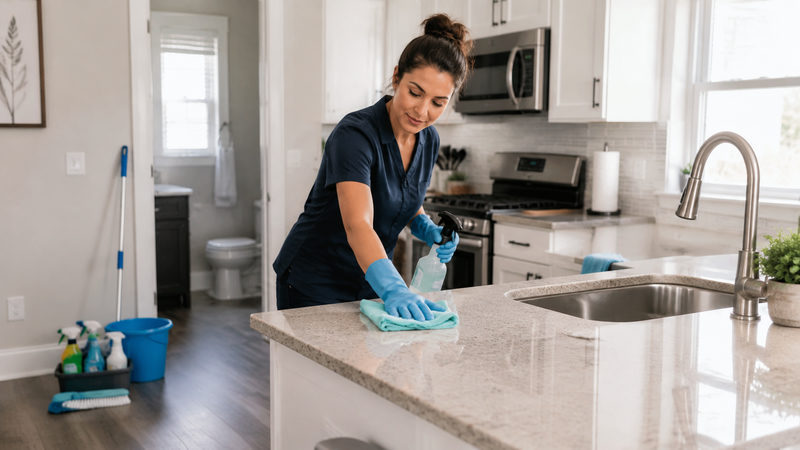
Basic cleaning does not mean every hidden corner gets detailed attention. It works best when the home already feels reasonably manageable. The goal is to reset visible, high-use spaces. The home feels cleaner without turning the appointment into a full deep clean.
For many households, this is the right level of care. It handles the surfaces people see and touch often. It also gives busy clients a repeatable plan. You know what gets attention, and the home becomes easier to maintain between visits.
Kitchen and bathroom cleaning matter most
Kitchens and bathrooms usually need the most consistent care. Kitchens collect crumbs, fingerprints, spills, grease, and food residue. Bathrooms collect soap residue, moisture, odours, splashes, and daily-use mess. Regular surface cleaning saves time before grime becomes stubborn.
In a kitchen, basic cleaning often centres on counters, exterior surfaces, sinks, and visible mess. Floor care matters too, because crumbs and spills do not stay in one place. Cooking habits also affect how fast residue builds up. A home that cooks daily may need more frequent visits.
In a bathroom, freshness and visible cleanliness come first. Sinks, counters, toilets, mirrors, tubs, and showers all collect residue. Moisture can make grime return quickly. Regular attention keeps the room more comfortable for family members, guests, and rental users.
Floors and tidy-up reset the whole home
Floor care gives routine cleaning a payoff you can see right away. Dust, hair, crumbs, and tracked-in dirt build up fast in busy homes. Pet homes and family homes often notice this even more. Entryways and shared living spaces usually show foot traffic first.
General tidy-up also makes the home easier to use. It does not replace organizing every drawer or closet. It does, however, help reset visible areas so rooms feel more open. One cleared surface can change the feel of the whole room.
For routine cleaning, the best approach is simple and consistent. Start with high-use rooms. Then keep floors, surfaces, bathrooms, and visible clutter under control. Basic cleaning keeps a home manageable without making the visit more complicated than it needs to be.
How Regular House Cleaning Prevents Build-Up
Dust, grease, and hair get harder with time
Dust, dirt, grease, and pet hair get harder to remove when they are left alone. At first, they may seem like small messes. Dust can settle into corners and base areas. Grease can turn sticky on kitchen surfaces.
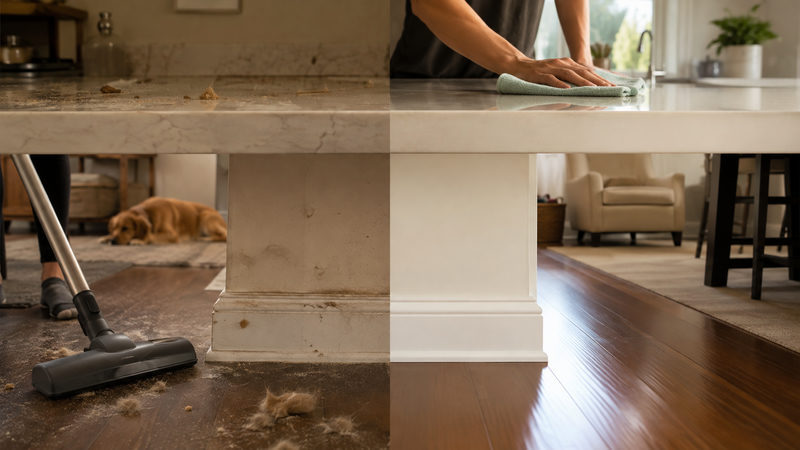
Pet hair brings its own challenge. It can gather around furniture, bedding areas, corners, rugs, and floors. Regular foot traffic can then move hair and dust into other rooms. Frequent cleaning collects it before it becomes embedded.
After working through many home-cleaning situations, prevention stands out as the clearest advantage. A light layer of dust takes less effort than thick build-up. Fresh crumbs take less time than sticky residue. Routine cleaning protects both the home and the cleaning budget.
Small messes spread when they are left too long
Mess rarely stays put. Crumbs from the kitchen reach the living room. Dust from shelves drops onto floors. Hair from pets or family members collects near furniture and base areas.
Routine cleaning interrupts that spread. Floors get cleaned before dirt travels through the home. Bathroom surfaces get wiped before residue becomes obvious. Kitchen surfaces get reset before grease needs heavier scrubbing.
This matters for rentals too. A tenant turnover unit may look simple at first glance. Small messes can still hide in corners, bathrooms, and kitchen areas. Regular property cleaning helps landlords and managers keep units closer to ready condition.
Cleaning first supports a healthier home environment
Regular cleaning also supports healthier daily living. Cleaning removes dirt, debris, and many germs from surfaces. For practical home guidance, the Government of Canada says cleaning high-touch surfaces helps reduce contamination risk. You can read more about cleaning and disinfecting high-touch surfaces.
Routine house cleaning is not the same as medical-level disinfection. Most homes need steady cleaning of visible dirt, high-touch areas, kitchens, bathrooms, and floors. Disinfecting may matter more when someone is sick. Clean surfaces also help any later disinfecting step work better.
For busy homes, this creates a useful rhythm. You keep surfaces fresh with basic cleaning. Then you request deeper or more detailed work when the situation calls for it. The home stays more comfortable without booking heavy services more often than needed.
Deep Cleaning vs Routine Cleaning: Which Do You Need?
Choose routine cleaning for manageable homes
Basic cleaning is best for regular maintenance. It fits homes that stay in fair condition between visits. The service supports general dusting, floors, kitchen surfaces, bathrooms, and tidy-up. It works well when the goal is to maintain comfort.
For example, a busy family may book weekly house cleaning to control pet hair and kitchen mess. A smaller household may choose biweekly cleaning to keep bathrooms and floors fresh. A tenant may book a basic clean before a property visit. Each situation uses cleaning as maintenance, not recovery.
The benefits of basic house cleaning are strongest when the home does not need heavy scrubbing. You get a consistent reset. The team can also spend time on the tasks that matter most each visit. That gives better value than using deep cleaning for every appointment.
Choose deep cleaning for build-up or extra detail
Deep cleaning is a better fit when a home needs extra attention. It helps with dust build-up, grease, pet hair, and hard-to-reach areas. The total time depends on size, condition, and requested detail level. A home with long-term build-up needs more labour than a lightly used space.
Many households start with deep cleaning first. Then they move to weekly house cleaning or recurring basic cleaning. This makes sense when it has been a long time since the last professional clean. Routine cleaning then begins from a cleaner baseline.
Deep cleaning can also help before hosting, after illness, or after a busy season. It gives more time to areas that routine maintenance may not fully cover. That can include heavier bathroom residue, kitchen grease, dust build-up, or pet hair zones. The key is choosing the right scope before the appointment.
Move in, move out, rental, and Airbnb cleaning need different planning
Move in / move out cleaning is more detailed than basic cleaning. It works before moving into a home or after moving out. Tenants, landlords, and property managers often need this service. Empty homes reveal dust, marks, and residue that furniture may have hidden.
Rental property cleaning also has its own needs. A landlord may need tenant turnover cleaning before showing the unit. A property manager may need cleaning before inspection. The condition can vary a lot from one tenant to another.
Airbnb and short-term rental cleaning may need a different scope again. Turnover cleaning can include resetting spaces and checking visible supplies. Laundry, supplies, guest expectations, property size, and reset needs can all change the total time. Clear details and photos help create a better estimate.
How Often Should a Home Be Cleaned?
Start with how fast mess returns
The right house cleaning schedule depends on real household patterns. Home size matters, but it is not the only factor. The number of people, pets, cooking habits, and rental use all matter. The best question is simple: how quickly does mess come back after cleaning?
A family that cooks every night may need more kitchen maintenance. A pet home may need more floor care and hair removal. A smaller apartment may stay tidy longer. The best schedule should match actual use, not a generic rule.
From practical experience, weekly house cleaning suits high-traffic homes well. It keeps bathrooms, kitchens, floors, and shared spaces from sliding too far. It also reduces the weekend cleaning load for busy households. That time savings can be worth more than the cleaning cost alone.
Weekly, biweekly, and monthly options
Weekly cleaning can help families, pet owners, busy professionals, and homes with frequent visitors. It also suits households that want a steady reset. Weekly visits often prevent that “big clean” feeling. Each appointment starts from a better place.
Biweekly routine cleaning may work for smaller households. It can also suit people who tidy between visits. Kitchens, bathrooms, and floors still need attention during the off week. A short personal reset can help the professional clean last longer.
Monthly cleaning works best when the home stays fairly tidy. It may not be enough for heavy cooking, pets, or high traffic. Still, it can help with floors, bathrooms, dusting, and visible surfaces. The right choice depends on how much mess you are comfortable living with between visits.
Rental and turnover cleaning follow the property calendar
Rental homes, tenant turnover units, and short-term rentals need a different rhythm. Cleaning may depend on move-out dates, guest stays, inspections, or showings. Timing matters as much as frequency. A clean that happens too early may need touch-ups later.
For Airbnb turnover cleaning, the schedule may follow guest checkout and check-in times. Laundry, supplies, and reset needs can affect the appointment length. Rental property cleaning may depend on unit size and condition. Photos and property details help set realistic expectations.
PB Cleaning 24/7 can discuss recurring booking needs based on the home and service type. Exact availability should be confirmed when booking. That keeps expectations clear for both the client and the cleaning team.
Professional Routine House Cleaning Costs and Booking Tips
What PB Cleaning 24/7 charges
PB Cleaning 24/7 standard cleaning is $35 per hour per cleaner. The minimum charge is 3 man-hours per visit. That minimum can mean 1 cleaner for 3 hours. It can also mean 2 cleaners for 1.5 hours each.
This pricing structure keeps the labour clear. You pay for the cleaner time needed to complete the agreed scope. Deep cleaning, move in / move out cleaning, rental property cleaning, and Airbnb cleaning are also commonly priced at $35 per hour per cleaner. The total time depends on condition, property size, and service details.
For cost-benefit planning, compare the rate with the time you save. If a 3 man-hour clean prevents six hours of weekend catch-up, the value is easy to see. Regular cleaning may also reduce the need for frequent heavy deep cleans. That is often where the return shows up.
How estimates work
PB Cleaning 24/7 typically does not provide in-person estimates. Estimates may use photos, home details, service type, and client information. Clear photos help the team understand the size and condition. They also help avoid a mismatch between expectations and available time.
Clients should provide the cleaning type when asking for a quote. For example, basic clean, deep clean, Airbnb, move out, office, or another service. The team also needs the client’s name, phone number, full address, and email address. Payment method should be confirmed as well.
Directions matter when the property is hard to find, rural, or outside town. Access details also matter if the client will not be home. For instance, a key location or door code should be shared clearly and treated carefully. Travel or fuel charges may apply outside Dawson Creek.
How to prepare for the appointment
A little preparation helps the appointment run smoothly. Secure pets in a designated area before the team arrives. PB Cleaning 24/7 is not responsible for pet safety during service. Store valuables such as cash and jewelry before the cleaning appointment too.
Clients should inspect furniture and belongings before and after service. Any concerns should be reported on the same day. This keeps communication clear and fair. It also gives the team a chance to understand concerns while the details are still fresh.
The team arrives between 9:00 AM and 6:00 PM. Clients receive a call 30 to 40 minutes before arrival. Answering unknown numbers can matter on service day. Exact arrival times cannot always be guaranteed because prior jobs, road conditions, weather, access, and job scope can affect the schedule.
Walk-through, payment, and contact details
For new bookings, a final walk-through and sign-off help confirm the completed work. Clients should review the cleaning before the team leaves, especially at the first appointment. If the client is unavailable at the end, that absence counts as acceptance of the work completed and time spent. Good access planning matters.
Payment methods include cash, cheque, or E-transfer to pbcleaning247@gmail.com. Confirming payment method during booking helps prevent delays later. Clients should also share any important notes before the visit. That can include parking, building access, pets, preferred contact details, or areas needing priority.
To book routine house cleaning or request an estimate, contact PBCleaning 247. The office is at 1021–102 Ave, Dawson Creek, BC, V1G 2B9, next to The Butcher Block. You can call +1 250-784-6846, email pbcleaning247@gmail.com, or visit https://www.facebook.com/PBCleaning247.
Conclusion
Routine house cleaning keeps everyday mess manageable. It supports a cleaner, calmer, and more comfortable home. It also helps reduce dust, grease, pet hair, dirt, and bathroom build-up before deep cleaning becomes necessary. For busy homes, that prevention can save both time and stress.
Basic cleaning works well for regular maintenance. Deep cleaning, move in / move out cleaning, rental property cleaning, and Airbnb turnover cleaning are better for heavier or more specific needs. The best choice depends on home condition, schedule, property use, and how quickly mess returns.
Contact PB Cleaning 24/7 to book routine house cleaning or request an estimate with photos and home details. You can also ask whether basic cleaning or deep cleaning is the better fit for your home. Call +1 250-784-6846, email pbcleaning247@gmail.com, or visit 1021–102 Ave, Dawson Creek, BC, V1G 2B9, next to The Butcher Block.


